You've decided to keep chickens. Maybe you've been watching YouTube videos for weeks, or maybe you impulse-ordered chicks from the feed store and now you've got a brooder box in your bathroom and 72 hours to figure this out. Either way, you need a coop — and the number of options on Amazon is overwhelming.
Here's the good news: your first coop doesn't need to be perfect. It needs to do three things well — keep predators out, keep your chickens dry, and be easy enough to clean that you'll actually do it every week. Everything else is a bonus.
We've tested and reviewed dozens of coops, and here are our picks for beginners specifically. These aren't just good coops — they're good first coops, meaning they're forgiving of rookie mistakes, easy to set up, and won't require a PhD in carpentry to maintain.
For most beginners, we recommend the Aivituvin Mobile Coop (4–6 chickens). It's the right size for a starter flock, the wheels let you move it easily, and the pull-out tray makes your first year of cleaning manageable. If budget is tight, the smaller 2–4 chicken version is an excellent starting point. If you want to buy once and never upgrade, go OverEZ.
What Most Beginners Get Wrong
The number one mistake new chicken keepers make isn't buying the wrong coop — it's buying too small. Amazon listings are notorious for inflating capacity. When a listing says "fits 6–10 chickens," that's usually based on the absolute minimum space per bird. In reality, that coop comfortably houses 4–6.
Why does this matter? Overcrowded chickens get stressed. Stressed chickens peck each other, lay fewer eggs, and get sick more often. Starting with a coop that's one size bigger than you think you need solves most beginner problems before they start.
The second mistake is underestimating predators. If you live anywhere in the United States, something in your area wants to eat your chickens — raccoons, foxes, hawks, neighborhood dogs, even rats. A coop with flimsy latches and chicken wire (the kind with the hexagonal holes) is an invitation. You need hardware cloth or galvanized welded wire and two-step latches at minimum.
What to Look for in Your First Coop
When shopping for a beginner coop, focus on these five things in order of importance:
Predator protection. This isn't negotiable. Look for galvanized wire mesh (not chicken wire), two-step latches on every door, and no gaps larger than half an inch. A raccoon can reach through a 1-inch gap and grab a sleeping hen off her roost. It happens more often than you'd think.
Size for your flock plus two. Planning on 3 chickens? Buy for 5. You will get more chickens. This is a universal law of chicken keeping. No one in the history of backyard poultry has said "I'm glad I got the smaller coop."
Easy cleaning access. You'll clean your coop at least once a week — more in summer. A pull-out tray is the single best feature a beginner coop can have. Without one, you're scooping droppings by hand or with a shovel. Trust us: the pull-out tray is worth an extra $30.
Ventilation. Good airflow prevents moisture buildup, which causes frostbite in winter and ammonia problems in summer. Look for vents near the roofline. A sealed box with no ventilation is a recipe for sick birds.
Reasonable assembly. Most pre-made coops come flat-packed and require assembly. Look for models that go together in under an hour with basic tools. If a coop has more than 100 hardware pieces or requires custom cutting, that's not a beginner coop.
Best Budget Beginner Coop
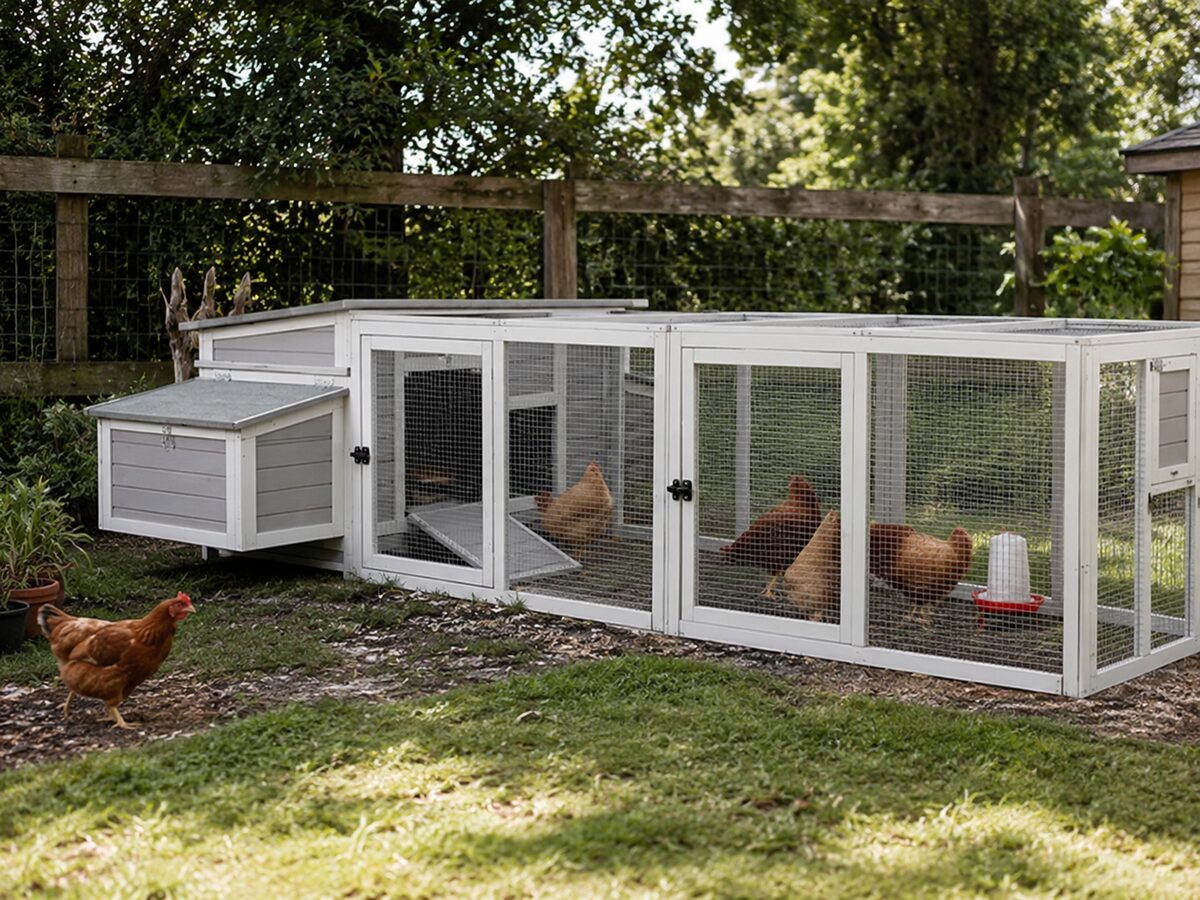
Aivituvin Mobile Coop with Wheels (2–4 Chickens)
72.3" × 26" × 39.4" · Fir wood · Expandable · Pull-out tray · Predator locks · Wheels included
Check Price on Amazon →If you're testing the waters with 2–3 hens and don't want to spend much, the small Aivituvin mobile coop is the best starting point. The wheels are a feature you don't appreciate until you have them — just roll the coop to fresh grass every few days and your chickens will thank you with cleaner feet and better foraging.
The pull-out tray underneath the roosting area slides out for quick waste removal. The expandable design means you can connect a second unit later if your flock grows (and it will). Predator-proof latches come standard, and the asphalt roof sheds rain well.
The catch? The "2–4 chickens" claim is optimistic. Comfortably, this houses 2–3 standard-size hens. If you're starting with more than 3, step up to the next size.
Best Overall Coop for Beginners
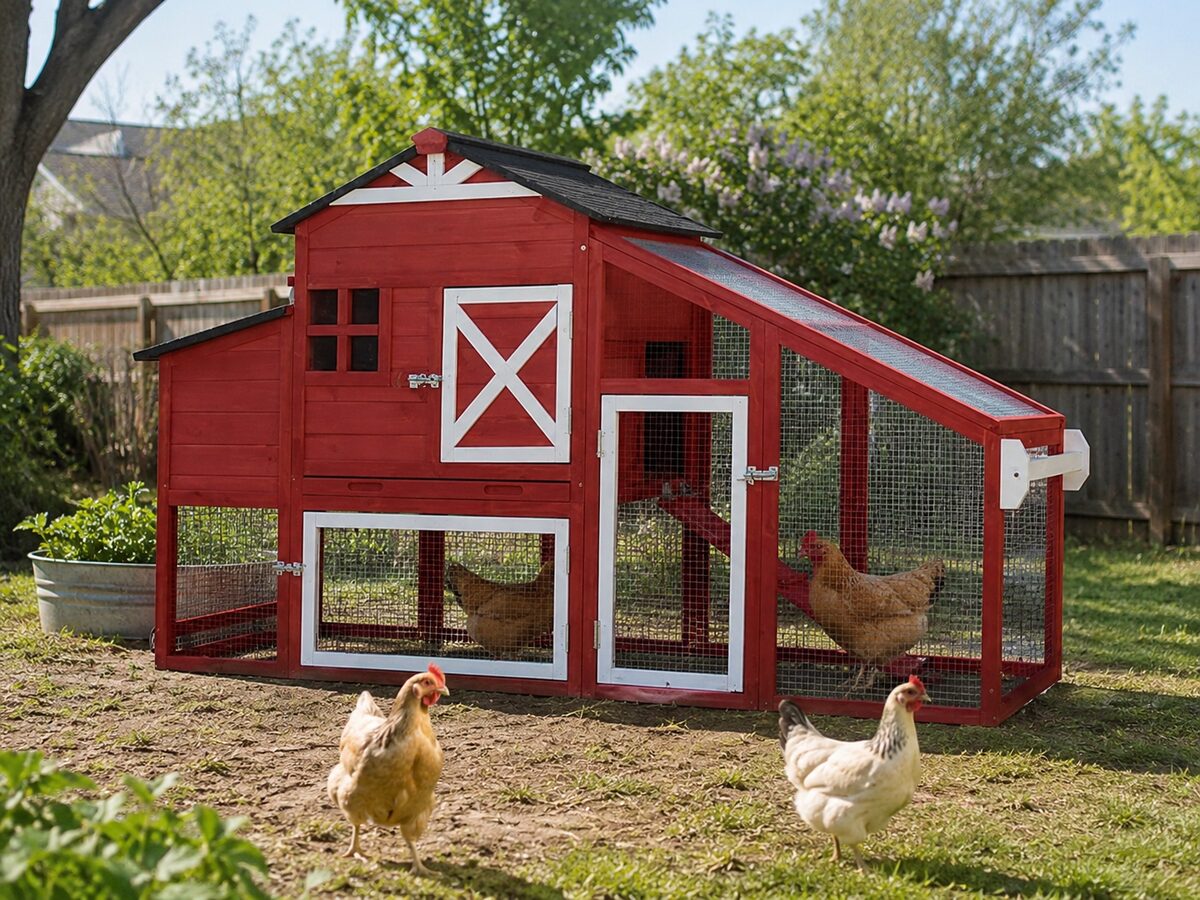
Aivituvin Mobile Coop with Wheels (4–6 Chickens)
82.4" × 25.8" × 44.1" · Fir wood · 300+ sold/month · Expandable · Pull-out tray · Asphalt roof
Check Price on Amazon →This is the coop we recommend to most beginners. There's a reason it's one of the best-selling coops on Amazon with over 300 units moving per month — it gets the fundamentals right at a price that doesn't sting.
For a first-time keeper starting with 3–4 hens, this size gives you breathing room. The attached run provides daytime scratching space, the wheels make repositioning easy, and the same pull-out tray system keeps cleaning manageable. The red barn aesthetic is a nice bonus — your coop should look like it belongs in your yard, not like a shipping crate.
The expandable design is key here. When you inevitably add more chickens next spring, you can connect another coop module rather than replacing the whole thing. That alone makes it the smartest investment for someone just getting started.
Best Premium Beginner Coop
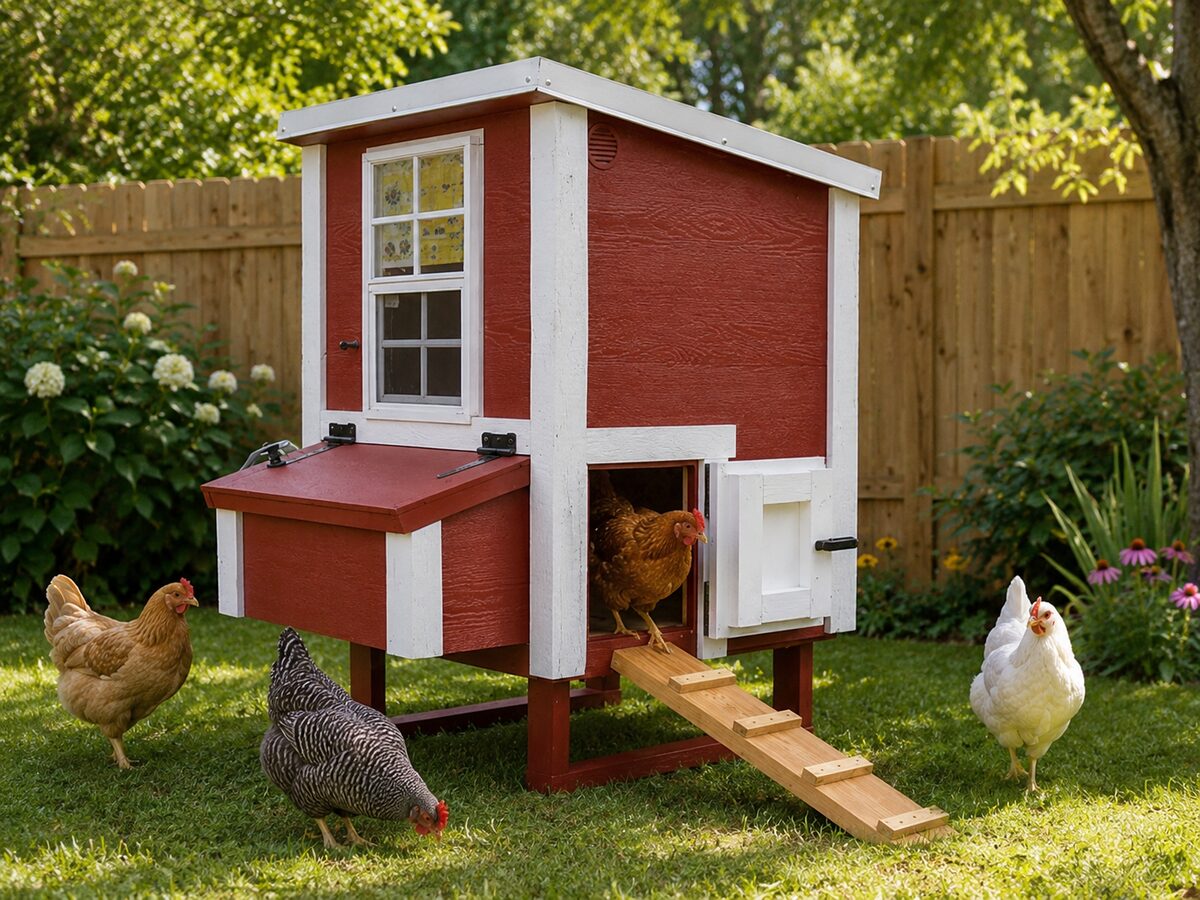
OverEZ Classic Small Coop (Up to 5 Chickens)
55" × 34" × 45" · Premium wood · Amish-built · Made in USA · 30-minute assembly
Check Price on Amazon →If you want to buy once and never upgrade, the OverEZ is it. This is a fundamentally different tier of coop — Amish-crafted in the USA from premium wood, it assembles in under 30 minutes with a screw gun and feels solid enough to survive a decade of weather.
The build quality is immediately obvious. Every latch is lockable, the wood is thick and properly finished, and the screened windows provide ventilation without letting in drafts. OverEZ has shipped over 140,000 of these coops and appeared on Shark Tank, so they've had plenty of time to work out the kinks.
It costs more than the Aivituvin models. Whether that premium is worth it depends on your priorities. If you're the type of person who buys quality tools once rather than replacing cheap ones, this coop fits that philosophy perfectly.
Best Low-Maintenance Option
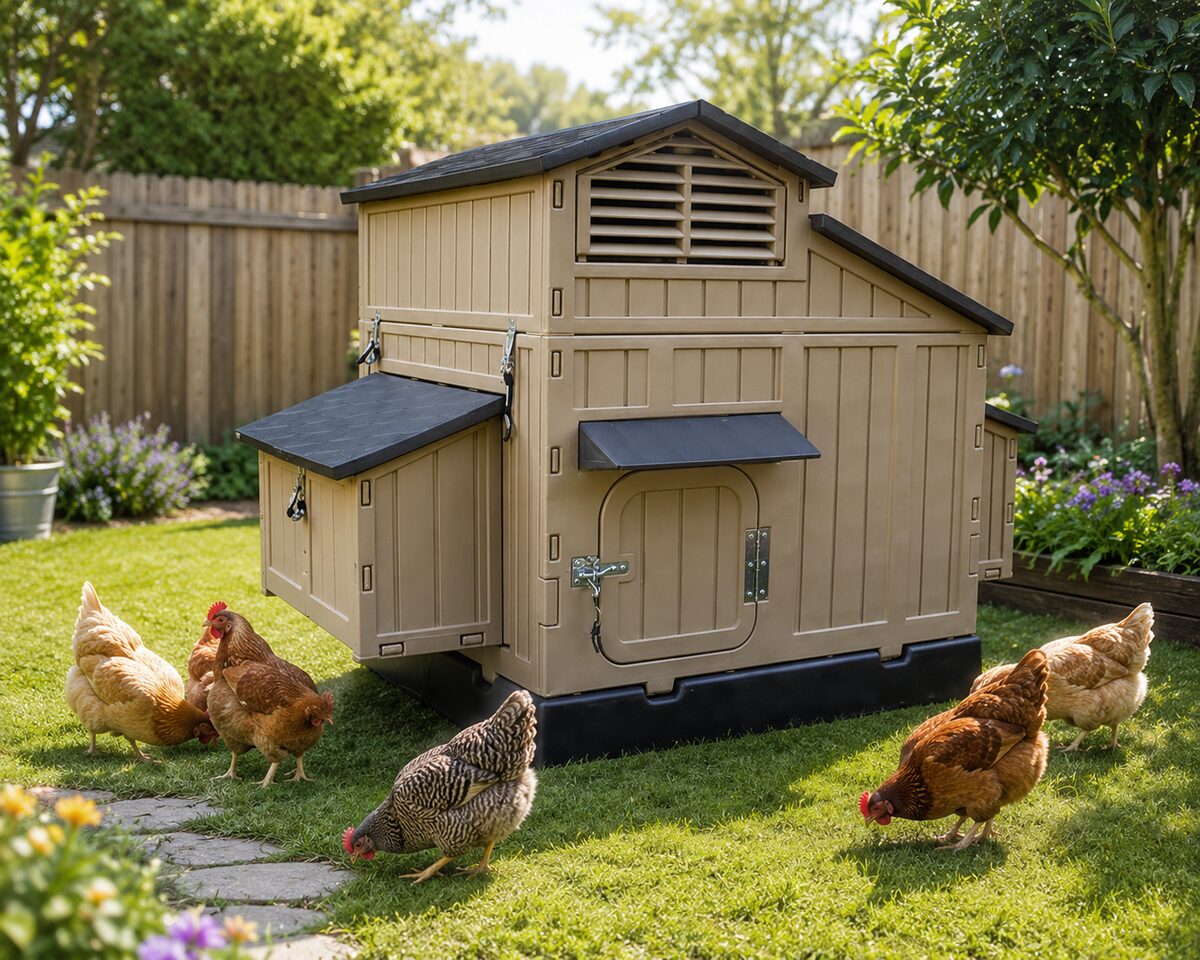
Formex Snap Lock Large Coop
45" × 45" × 32" · Double-wall plastic · No tools needed · Insulated · Removable litter tray · Made in USA
Check Price on Amazon →Not everyone wants a rustic wood coop — and honestly, if your number one concern is easy cleaning, plastic wins. The Formex Snap Lock snaps together without any tools, is made from double-wall insulated plastic, and has a removable litter tray you can hose clean in under 5 minutes.
The big advantage for beginners: no wood rot, no mites, no painting, no sealing. Wood coops require periodic maintenance. The Formex requires a garden hose. That simplicity is genuinely appealing if you're not sure how deep into the hobby you'll go.
It won't win any beauty contests — it looks more like a utility box than a farmstead coop. But function over form has its place, especially when you're learning the basics and don't want the coop itself to become a project.
What to Avoid as a Beginner
Coops under $100. There are dozens of ultra-cheap coops on Amazon. Almost all of them use thin plywood, chicken wire instead of hardware cloth, and single-step latches a raccoon can open. You'll replace it within a year.
"Walk-in" coops that seem too cheap. If a massive walk-in coop costs the same as a small premium coop, the materials are cutting corners somewhere. Check reviews for comments about thin walls, gaps in construction, and hardware that rusts quickly.
Building from scratch for your first coop. Unless you're an experienced woodworker, a DIY coop will take 10× longer and cost more than you expect. Get a pre-made coop for your first flock, learn what you actually need, and then build your dream coop for flock number two.
Any coop with no pull-out tray. Seriously. This is the hill we'll die on. Without a tray, you're scooping waste by hand every week. With a tray, it's a 5-minute job. Every coop on our recommended list has one.
The Bottom Line
Your first coop is a learning experience. You'll figure out what you like and don't like about it within a month of owning chickens. The goal isn't to buy the perfect coop — it's to buy one that's safe, cleanable, and big enough to keep your birds healthy while you learn the ropes.
For most beginners, the Aivituvin 4–6 chicken mobile coop hits the sweet spot — it's affordable, expandable, easy to clean, and big enough that you won't outgrow it in the first year. If you want premium quality you'll never replace, go OverEZ. If cleaning is your worry, go Formex.
Either way, get the coop set up before the chicks arrive. Your bathroom brooder has an expiration date.