Best for Small Flocks (2–5 Chickens)
Just getting started? These coops are affordable, easy to assemble, and sized right for a small backyard flock.
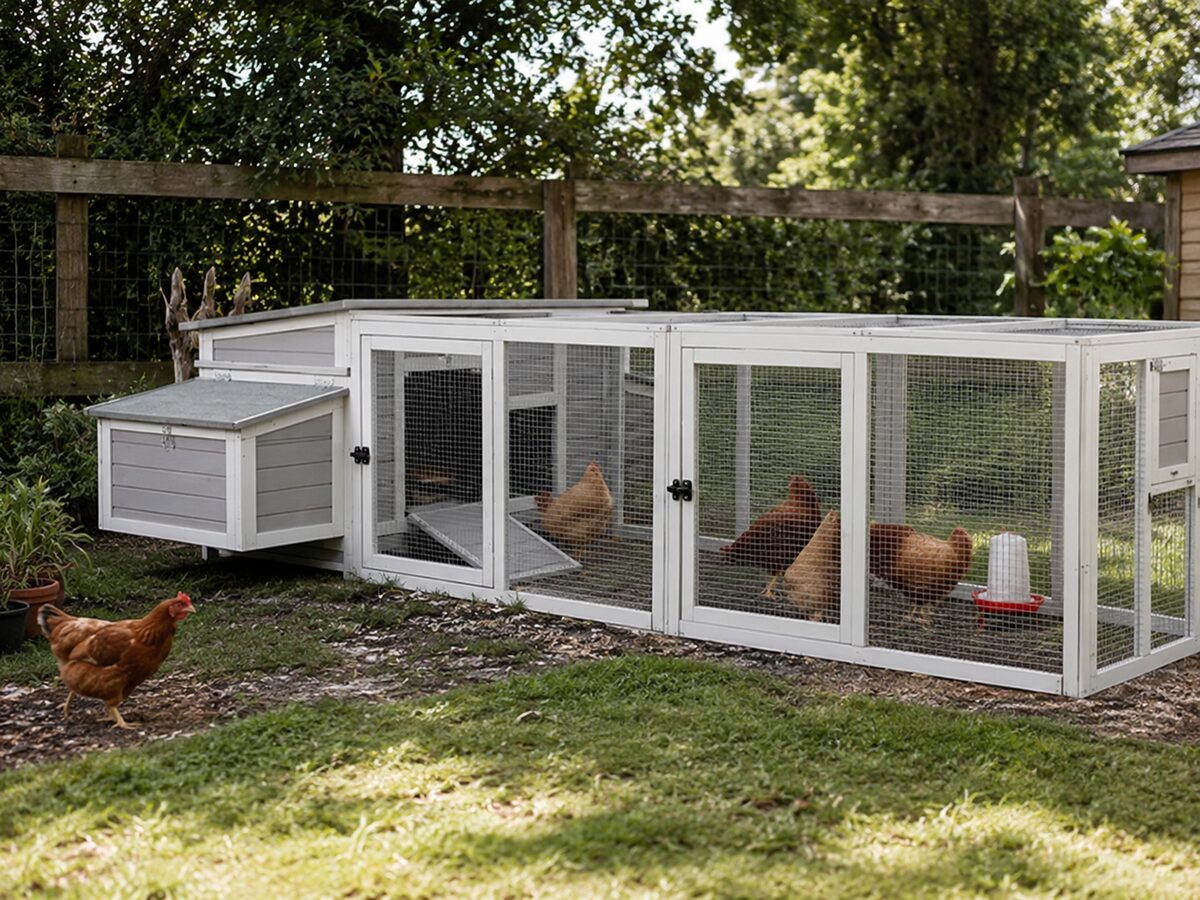
Aivituvin Mobile Coop with Wheels
The best entry point for new chicken keepers on a budget. Built-in wheels let you roll it to fresh grass, the pull-out tray makes weekly cleaning painless, and the expandable design means you can add a second coop later if your flock grows. At its price point, nothing else comes close.
2–4 Chickens
72.3" × 26" × 39.4"
Fir Wood
~45 Minutes
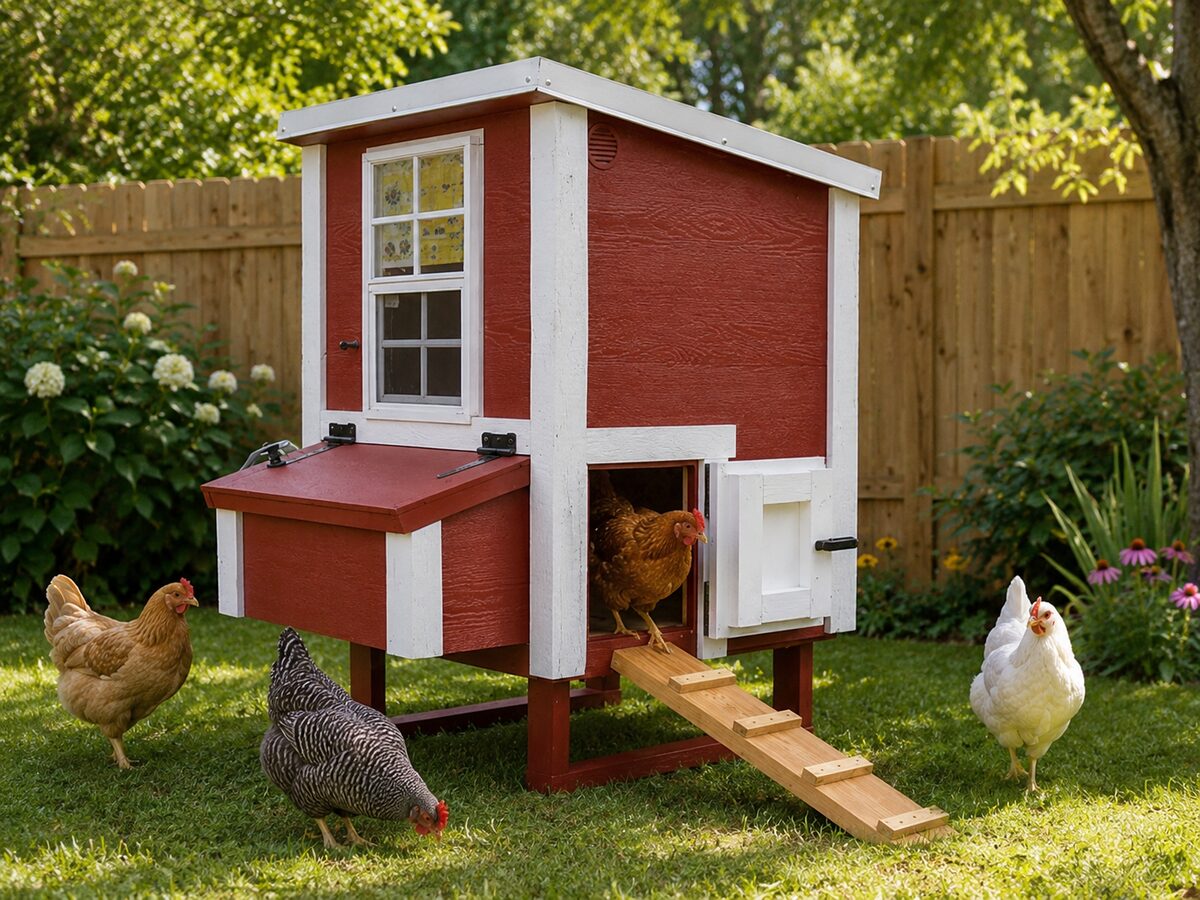
OverEZ Classic Small Coop
If you want something built to last decades, this is it. Amish-crafted in the USA from premium wood, the OverEZ Small assembles in under 30 minutes with just a screw gun. Lockable latches on every door. The brand appeared on Shark Tank and has shipped over 140,000 coops. You pay more, but you get a coop your grandkids could inherit.
Up to 5 Chickens
55" × 34" × 45"
Premium Wood
~30 Minutes
Best for Growing Flocks (4–6 Chickens)
The sweet spot for most backyard keepers. Room for a solid laying flock without taking over your yard.
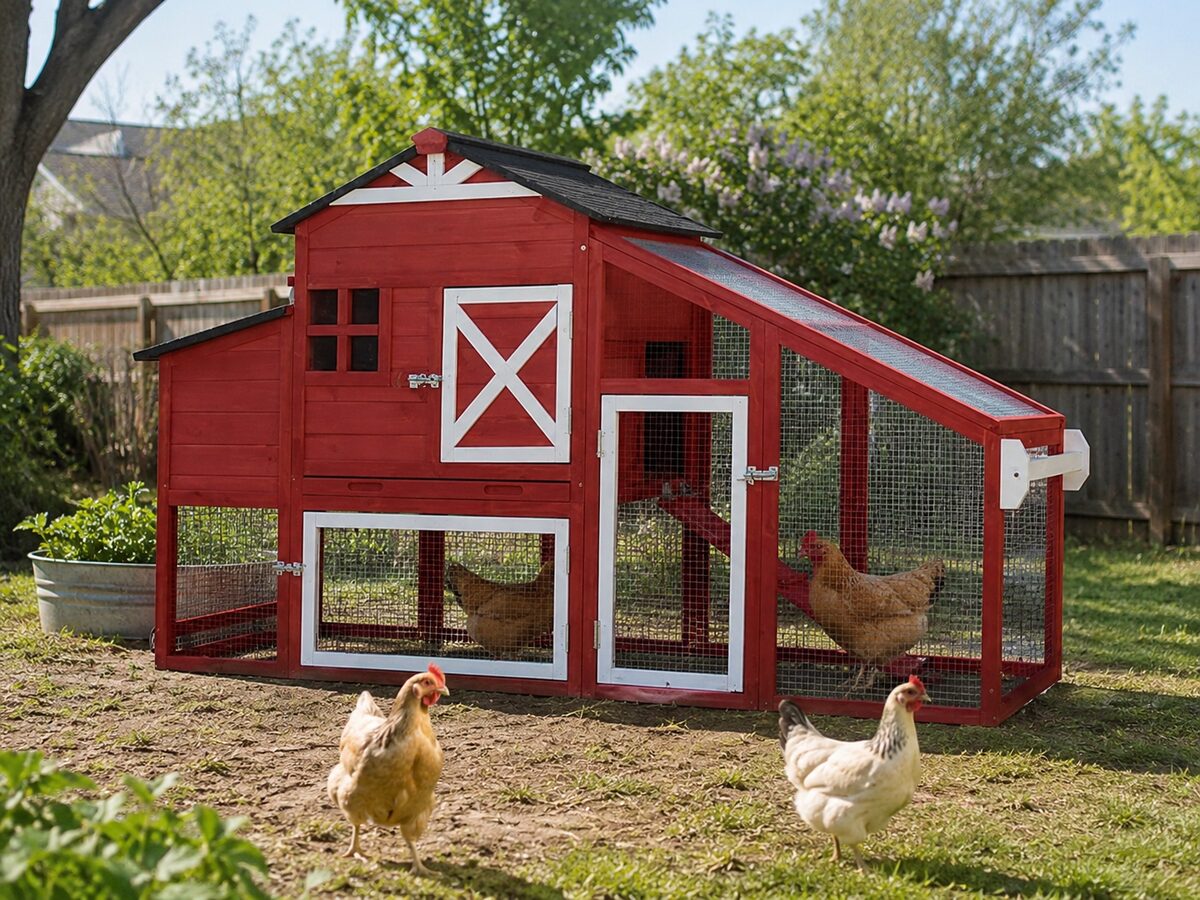
Aivituvin Mobile Coop with Wheels (Red)
This is the coop we'd recommend to most people. Over 300 bought per month on Amazon and for good reason — it's the right size for a typical backyard flock, the wheels make it effortless to move, and the expandable design grows with you. Predator-proof nesting boxes, asphalt roof, and a pull-out tray that makes cleaning a 5-minute job.
4–6 Chickens
82.4" × 25.8" × 44.1"
Fir Wood
~45 Minutes
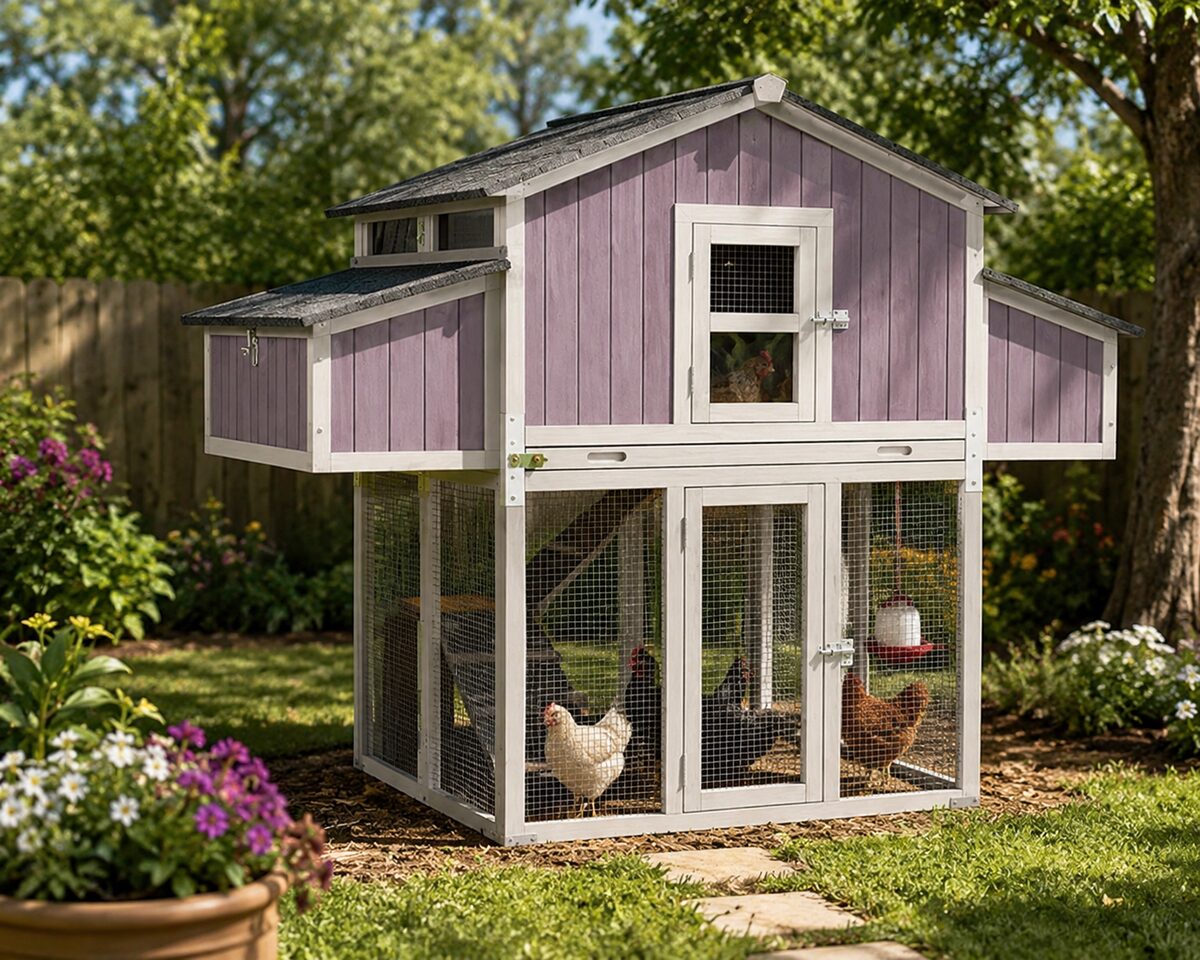
Aivituvin Large Folding Coop
Don't need wheels? This stationary coop gives your hens a tall, two-story home with a unique folding design that makes assembly a breeze. The raised sleeping quarters keep chickens off damp ground, while the enclosed wire mesh lower level gives them space to scratch and dust-bathe. Two nesting boxes and smooth perches round it out.
4–6 Chickens
69.8" × 42" × 54.6"
Fir Wood
Folding Design
Best for Bigger Flocks (6–15 Chickens)
For those who went from "just a couple hens" to "how did I end up with twelve?" — no judgment, it happens to everyone.
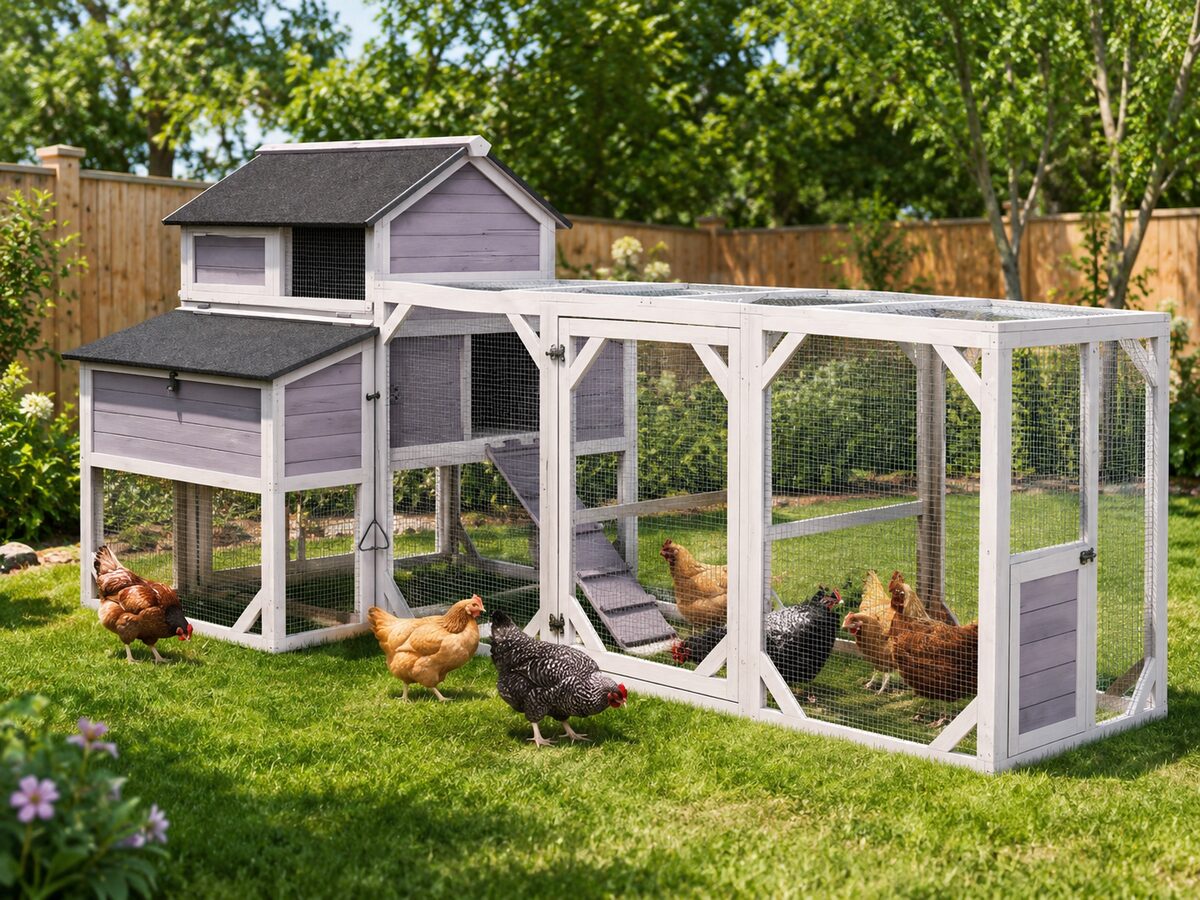
Aivituvin Extra Large Coop with Run
When 4–6 isn't enough anymore, this is your next step. Nearly 10 feet long with a spacious attached run, 6 nesting boxes, and galvanized wire mesh for serious predator protection. Five access doors let you reach every corner without climbing inside, and extra-large sliding trays make waste removal quick.
6–10 Chickens
118" × 26" × 50"
Fir Wood
6
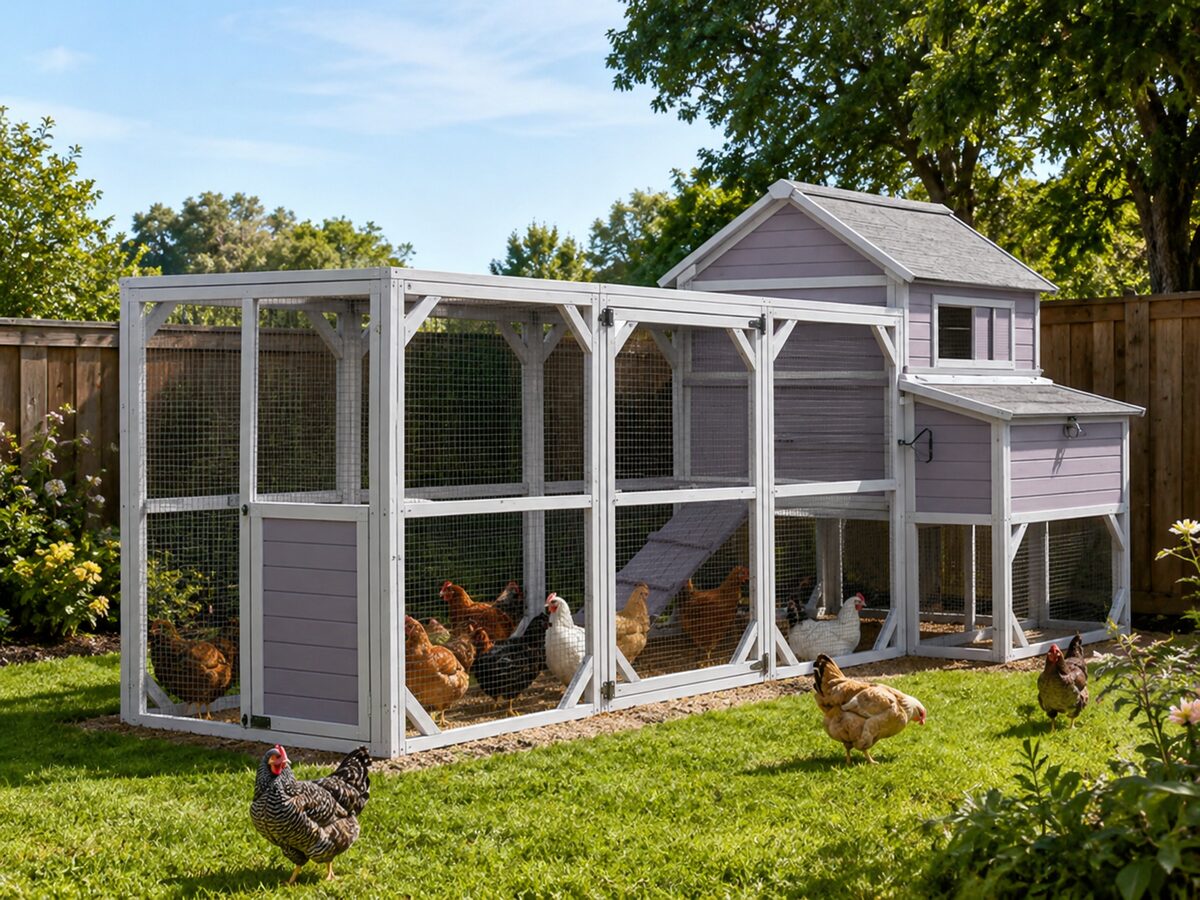
Aivituvin Extra Large Coop (8–12)
The biggest Aivituvin on our list, and it delivers. Over 11 feet long with reinforced L-shaped metal brackets at every corner. The run is wrapped in high-density galvanized wire mesh, and PVC-coated nesting boxes keep the interior dry year-round. If you're serious about backyard chickens and want room to grow, this is the one.
8–12 Chickens
134.5" × 33.5" × 62.4"
Fir Wood + Metal
6
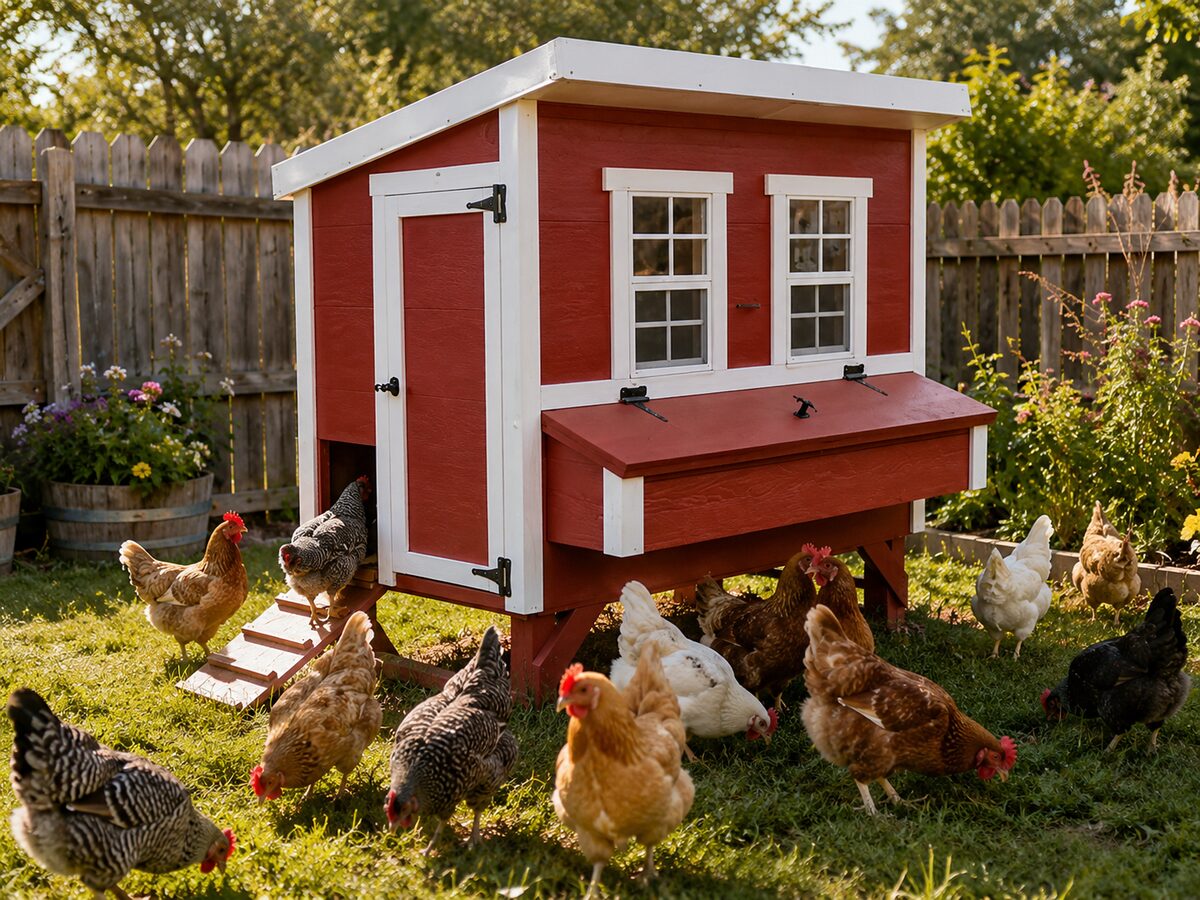
OverEZ Classic Large Coop
OverEZ's best-selling model and their self-proclaimed best value. Houses up to 15 chickens in a solid, Amish-built structure that handles brutal winters and scorching summers equally well. Screened windows, built-in vents, and a full-size man door make daily management easy. Assembles in under an hour. This is a forever coop.
Up to 15 Chickens
Premium Wood
USA (Amish)
~60 Minutes
Low-Maintenance & Modern Coops
Not everyone wants wood. These plastic coops won't rot, won't harbor mites, and clean in minutes.
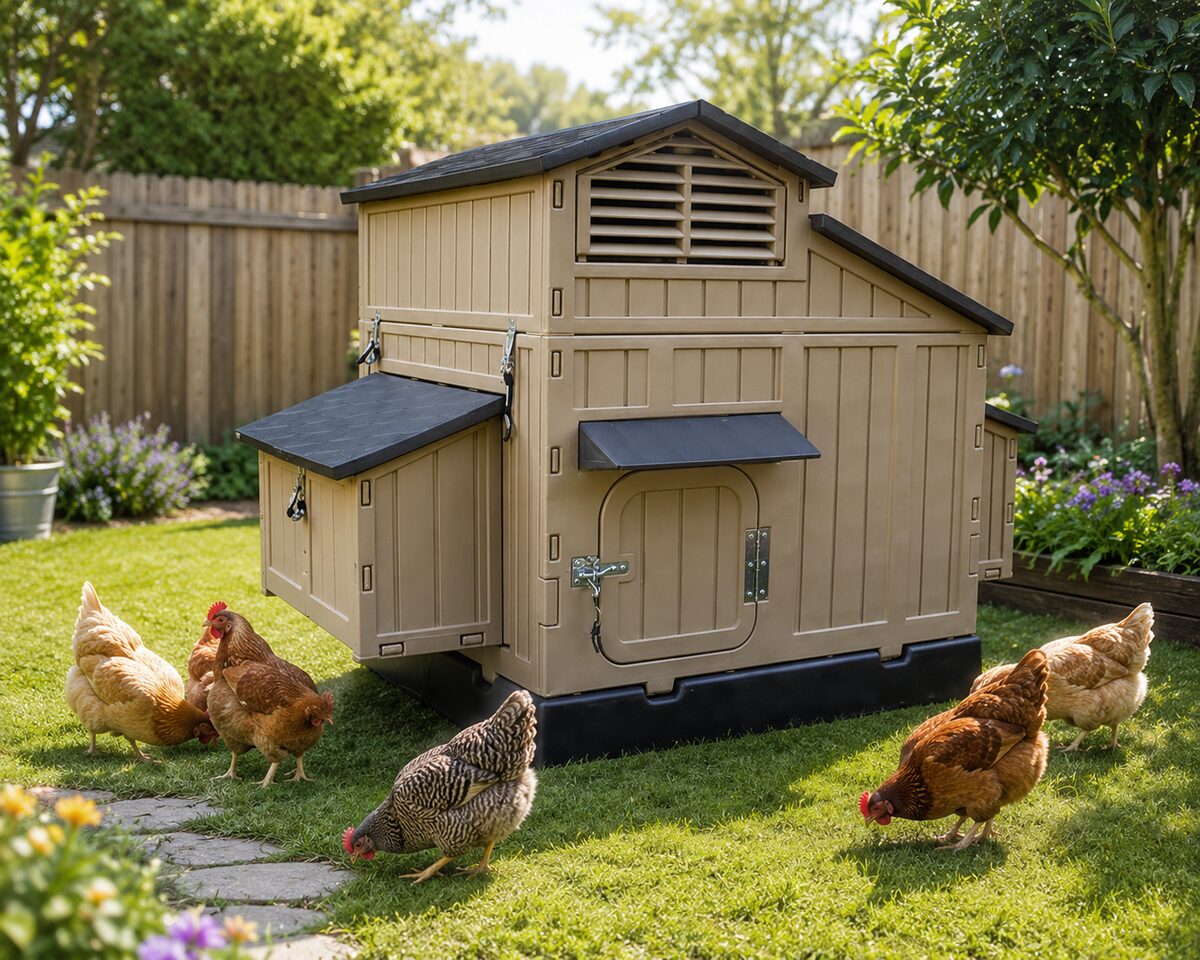
Formex Snap Lock Large Coop
Zero tools. Zero wood rot. Zero mites. The Snap Lock snaps together without any tools, is made from double-wall insulated plastic that's UV and water resistant, and has a removable litter tray for effortless cleaning. It won't win any beauty contests, but if low-maintenance is your priority, nothing beats it. Made in the USA.
4–6 Large / 6–12 Bantams
45" × 45" × 32"
Double-Wall Plastic
No Tools Needed
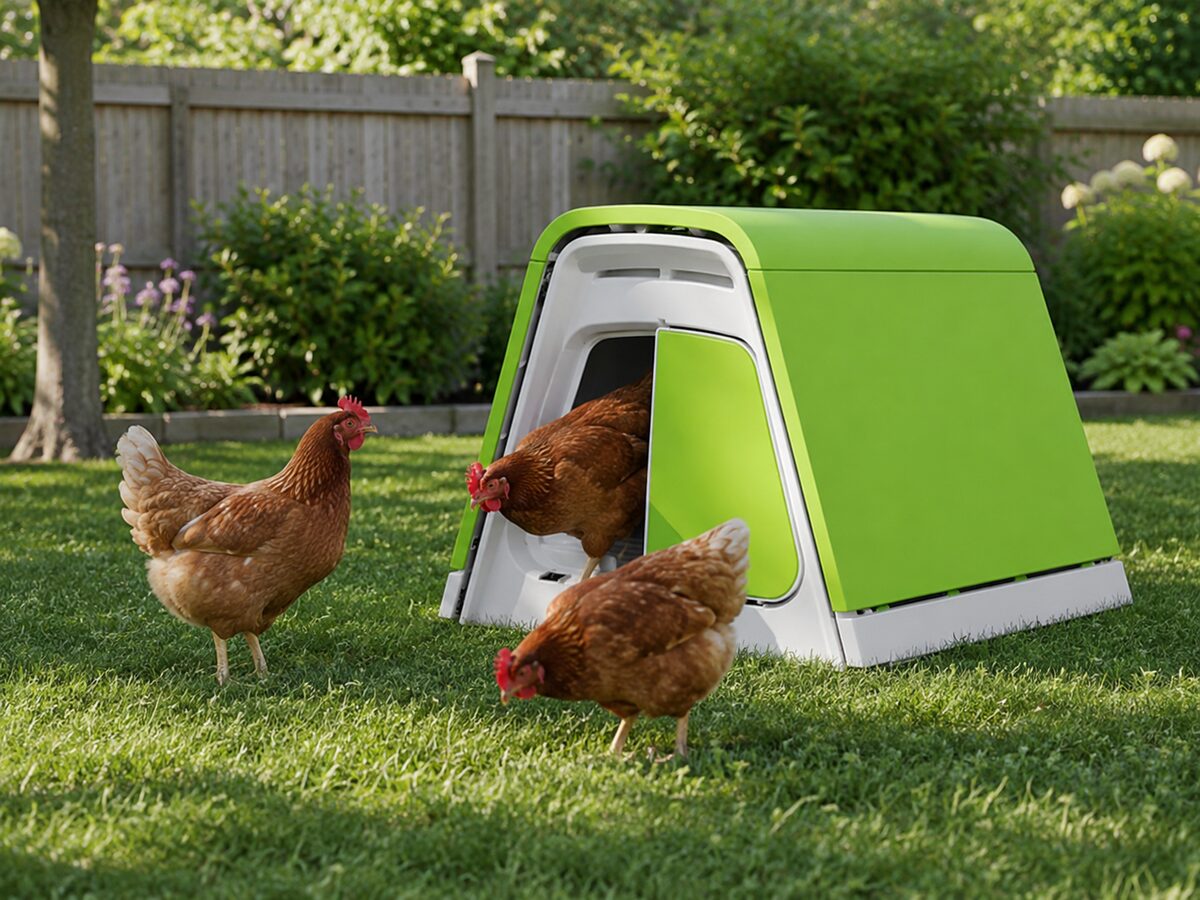
Omlet Eglu Cube
The Tesla of chicken coops. This futuristic plastic coop is engineered to eliminate every annoyance of chicken keeping. Smooth surfaces hose clean in 3 minutes — no wood means no mites, no rot, ever. Two-step raccoon-proof closures, twin-wall insulation for all climates, and optional smart autodoor integration. It costs more than anything else on this list, and people who own one say it's worth every penny.
Up to 6 Chickens
Molded Plastic
10 Years
~3 Minutes